Blog
Tomorrow is Halloween, and as per tradition, all of us are focused on things that go bump in the night—dangers that lurk outside, in the unknown. This is especially true in the business setting. We all like to think the threats we face are faceless and unknown, but it is certainly not unheard of for the call to come from inside the house.
To demonstrate this, we’ve reworked Edgar Allen Poe’s tale of Hop-Frog. I hope you enjoy and, more importantly, think about what it can tell us.
Most business owners view their technology budget the exact same way they view their electric bill. It is a mandatory, recurring, and thoroughly uninspiring cost of doing business. You pay for hardware, software licenses, and cloud storage, and at the end of the month, you wonder what you actually got for your money.
Treating technology as pure overhead is a mistake. The thing is that when selected and configured correctly, your IT infrastructure stops being a line-item expense and starts acting as a direct driver of business efficiency and revenue.
One of the most well-known phenomena that can negatively affect workplace productivity and quality of life is stress. Sure, it might sound obvious, but too many of us automatically let our stress take the wheel and have a much harder time as a result…and of course, as helpful as modern technology is for work, it also makes this stress much, much easier to accumulate.
Let’s discuss a few strategies to help your entire team (including yourself) spot an incoming spiral and nip it in the bud.
Expecting high performance from your workforce while supplying outdated hardware and sluggish networks creates an unnecessary operational bottleneck. When systems lag, staff energy shifts from productive problem-solving to passive frustration. Leaving technical friction unaddressed is a fundamental leadership failure.
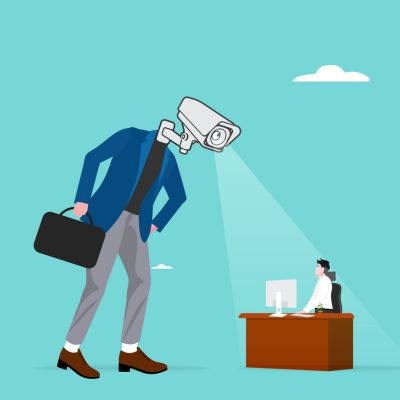
Monitoring every single keystroke might seem like an easy way to guarantee employee output. In practice, invasive surveillance destroys workplace culture, stifles initiative, and drives top talent out the door. Business leaders need a balanced framework that verifies progress without compromising trust.
When an employee leaves a company, the exit interview usually covers compensation, career growth, or management. Rarely does someone write down "my computer was excruciatingly slow" as their primary reason for quitting. Yet everyday technology frustration slowly drains morale, pushing your best people straight out the door.
Balancing network security with team trust is one of the hardest hurdles growing businesses face today. Overly aggressive restrictions make your staff feel like inventory, while zero oversight leaves sensitive customer data exposed on personal laptops. You need a middle ground that protects company assets while giving your people room to do great work… especially as they work remotely.
When a growing business hires an internal IT director, the goal is to establish strategic technology leadership. You need a professional focused on long-term corporate growth, data resilience, and a forward-looking infrastructure roadmap.
However, the operational reality frequently falls short of that goal. Instead of auditing server backups, optimizing cloud environments, or executing vulnerability scans, many internal directors end up drowning in daily technical support. Spending hours resetting user passwords, troubleshooting local Wi-Fi drops, and repairing hardware means paying an executive salary for tier-1 help-desk support. This misallocation of budget inevitably leads to burning out your best technical talent.

Nowadays, “the office” is digital, accessed from one’s home, adding an extra layer to the responsibilities of the human resources professional. After all, slow connections, login issues, and other problems can and do exacerbate burnout, leading to turnover.
Let’s take a moment to consider how technology can help the modern HR department in its daily operations.
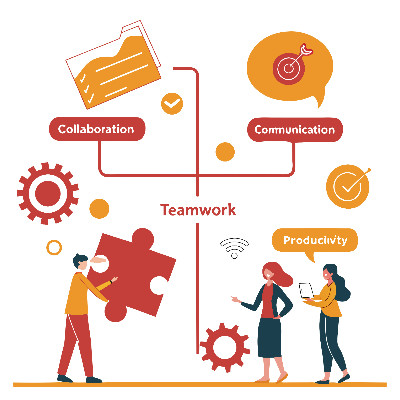
Communication is a critical element of any business’ success, but perhaps more so in the average small or even medium-sized organization. Internal communications can make or break profitability, especially if they fail. Disconnected files and ongoing email chains often translate to duplicated efforts and missed deadlines or opportunities.
Let’s talk about how you can avoid the kind of friction that hinders your ability to collaborate and holds back your potential for success.
The workplace is a strange beast. You’re taking a group of people with wildly different personalities, throwing them together for 40+ hours a week, and asking them to act like a cohesive unit. It’s a mix of professional deadlines and how about those Mets? water-cooler talk.
Whether your office is a suite downtown or a series of icons on a taskbar, that blend of personal and professional is healthy. We’re social creatures, after all… but when those two worlds bleed into each other without any rules, things get messy—and I’m not just talking about hurt feelings. I’m talking about security risks that could cost you $15,000 (or much, much more).
The biggest security risks to your business often come from within your own office. This doesn’t mean your employees are criminals; in fact, the problem usually starts because your staff is hardworking and helpful.
When people are determined to do a great job, they often develop habits that unintentionally put your data at risk. Here is how that happens and what you can do to fix it.
Does the new year have your business relocating offices sometime in the next 6 to 12 months? One of the most expensive mistakes a business can make when moving is treating IT like the last box to be packed (or unpacked). Instead of running the risk that your IT won't work as intended in your new space, we’ve compiled the three most important IT considerations for your new office location so your team can hit the ground running.
We’ve all been there: You’re deep into a complex problem, finally finding your rhythm, when, bing.. A quick question pops up on one of the platforms you use to communicate (we all have several). You answer it in thirty seconds and try to get back to work.
If this happens one time, it might be okay, but if it happens repeatedly as the day goes on; the damage is already done.
Disruptions to your operations are no longer a possibility, but an inevitability. Situations like natural disasters, major IT failures, and security breaches happen every day for businesses all over the world, and you can bet that each of them is scrambling to minimize downtime to keep their reputations and bottom lines in check. What they might not know is that a business continuity strategy is at the heart of any successful recovery, and despite what you might think, it’s easier to carry out than you might suspect.
We’re several years past the COVID pandemic at this point, and many companies are calling their remote workers back to the office. Still, there is merit in having a remote workforce, even if it’s not strictly “mandatory” or “necessary” any longer. Today, we want to share some tips to help your business thrive with a remote workforce and what you can do to optimize your odds of success with this work environment.
The concept of a four-day workweek has long been debated, with strong anecdotal evidence supporting its effectiveness. The nation of Iceland provides one of the most compelling real-world examples.
Their journey began small in 2015 with initial trials involving about 2,500 workers; or, just under one percent of the population. These efforts have dramatically expanded, however, and today, nearly 90 percent of Icelandic workers have moved to a reduced work schedule, typically around 36 hours a week for full-time workers. What’s more, this shift has occurred without any negative impact on the economy. In fact, Iceland's society has seen significant benefits.
Let’s face facts… once you’ve spent enough time and money investing in your business, you’re going to want to see some return when the time comes for you to move along and let someone else take the reins. Whether that time is now or years away, there’s a critical element to keep in mind: any buyer won’t just be buying your business and its resources… they’re also buying any problems that come with it.
Therefore, instead of having your asking price suddenly chopped down when a potential buyer conducts their due diligence and discovers significant risks, investing in your IT now can generate significant returns when the time comes to divest from your company.
Customer Login
News & Updates
Contact us
Learn more about what Integrid can do for your business.
Integrid
111 W Lewis St
Greensboro, North Carolina 27406